Safety doesn’t improve with good intentions—it improves with consistent action. And one of the most effective, low-effort, high-impact actions a supervisor can take is delivering a meaningful toolbox talk. Yet, too many teams treat these sessions as a box-ticking exercise, reading from a generic script that no one remembers by lunch.
The real problem? Most health and safety toolbox talk templates lack structure, relevance, and engagement. They’re either too vague to be useful or so rigid they can’t adapt to real job sites. A strong template shouldn’t replace thought—it should focus it.
This guide delivers a proven, customizable health and safety toolbox talk template designed for clarity, retention, and action. You’ll also get practical examples, common pitfalls, and pro tips for making safety conversations stick.
Why a Good Toolbox Talk Template Matters
Toolbox talks are short, focused safety meetings—typically 10 to 15 minutes—held at the job site before work begins. Their purpose isn’t just compliance; it’s behavior change.
When poorly executed, they breed disengagement. When done right, they reinforce culture, clarify risks, and prevent incidents.
- A solid template does three things:
- Standardizes the process so nothing critical is missed.
- Localizes content to the specific task, crew, or hazard.
- Engages workers through interaction, not monologue.
Without a template, even experienced supervisors fall into ruts: repeating the same topics, skipping key steps, or failing to document discussions. A good template prevents oversights and ensures consistency across shifts and sites.
Core Elements of an Effective Toolbox Talk Template
A high-impact template isn’t just a checklist—it’s a conversation framework. Here are the non-negotiable components:
#### 1. Session Header Capture basic details: - Date and time - Location/work area - Supervisor name - Crew/team members present (with sign-in) - Topic focus (e.g., “Working at Heights”)
This creates accountability and supports audit trails.
#### 2. Hazard Identification List the 1–3 key risks tied to the day’s work. Be specific: ❌ “Falls are dangerous.” ✅ “Unprotected edge at roof level, 24 ft. elevation—no guardrails installed.”
Use real site conditions. If possible, point to the actual hazard during the talk.
#### 3. Safe Work Practices Outline the correct procedures. Use clear, action-oriented language: - “Inspect harness and lanyard before each use.” - “Ensure anchor point is rated for 5,000 lbs.” - “No solo work above 6 feet—buddy system required.”
Link to company policy or OSHA standards where applicable.
#### 4. Near-Miss or Incident Example Share a brief, relevant story—real or hypothetical: > “Last month, a worker in Zone C stepped back near an open skylight. Harness was worn but not clipped. Could have been fatal.”
Stories trigger emotional retention better than abstract rules.
#### 5. Interactive Discussion Prompt Force engagement with open-ended questions: - “What’s one thing that could go wrong today?” - “How would you stop a coworker taking a shortcut?” - “Has anyone seen this hazard before? How was it handled?”
Silence means disengagement. Push for responses.
#### 6. Action Commitments End with specific takeaways: - “Each team member will double-check anchor points before ascending.” - “Spotter will be assigned for all lift operations today.”
Make it tangible.
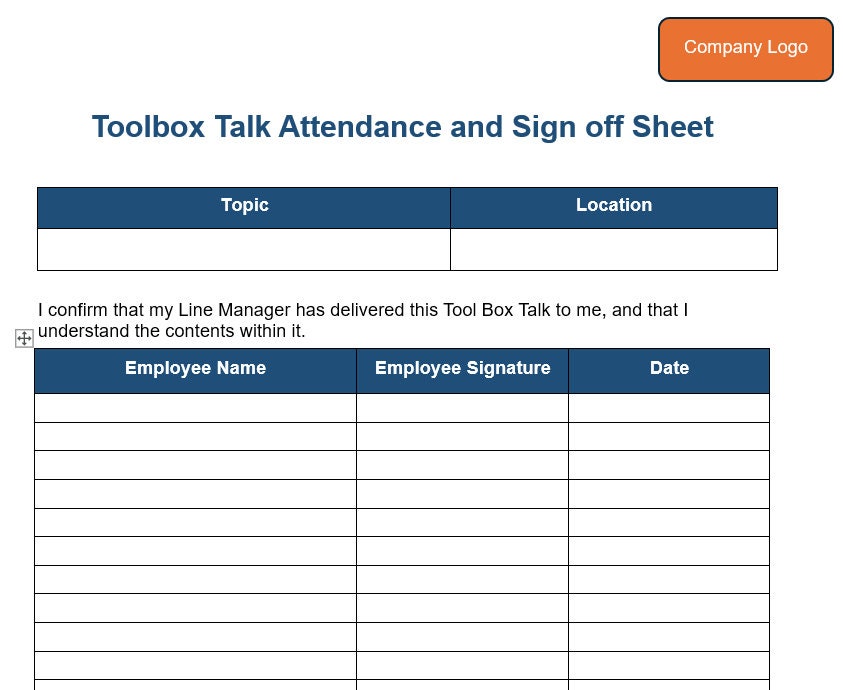
#### 7. Sign-Off Section All attendees sign to confirm participation and understanding. This isn’t just about liability—it reinforces personal responsibility.
Sample Toolbox Talk Template (Printable Format)
Topic: Fall Protection – Roof Work Date: April 5, 2025 Time: 6:45 AM Location: Building B, Roof Level Supervisor: J. Martinez
Team Members Present: [Signature line for each worker]
1. Key Hazards Today: - Unprotected roof edges (east and south sides) - Slippery surface due to morning dew - Overhead power line within 10 ft. of work zone
2. Required Safety Measures: - Full-body harness with shock-absorbing lanyard - 100% tie-off at all times when near edge - Use designated walkways marked with tape - Maintain 10-ft clearance from power line—use spotter
3. Real Incident Reminder: > A roofer in Indiana last year stepped back to adjust a tool, lost balance, and fell 22 feet. Harness was present—but not connected. Result: two fractured vertebrae and 6 months off work.
4. Discussion Questions: - What’s your biggest concern about working at this height today? - How do you know your anchor point is secure? - What would you do if you saw someone moving near the edge without being tied off?
5. Team Commitments: - All crew will perform a harness pre-use inspection. - No tools or materials stored within 6 feet of edge. - Spotter assigned for material hoisting.
Supervisor Signature: ___________________ Team Signatures: _________________________
Common Mistakes That Kill Toolbox Talk Effectiveness
Even with a solid template, poor delivery undermines results. Watch for these traps:
#### ❌ Recycling the Same Topics Monthly Talking about “PPE” every single month breeds complacency. Rotate topics based on work scope, season, or incident trends.
Fix: Create a 12-week rolling plan aligned with project phases.
#### ❌ Monologue Instead of Dialogue If the supervisor does 90% of the talking, workers tune out.
Fix: Ask questions first. Use “What? So what? Now what?” structure: - What hazard are we facing? - So what could happen? - Now what are we going to do about it?
#### ❌ Ignoring Crew Input Experienced workers often know the real risks better than the plan.
Fix: Start with, “What safety issue hasn’t been addressed yet?”
#### ❌ No Follow-Up Talks that end with no verification or review have zero accountability.
Fix: Do pop-up checks later in the shift. Reference the talk: “Remember this morning—we said no unsecured tools near the edge. I just saw one up there. What gives?”

#### ❌ Poor Documentation Missing or incomplete sign-ins make audits painful and nullify legal protection.
Fix: Use laminated templates with dry-erase markers, or mobile apps that sync to cloud storage.
When to Customize Your Template
A one-size-fits-all approach fails when work changes. Adapt your template for:
#### High-Risk Tasks For confined space entry, hot work, or crane lifts, expand the template to include: - Permit requirements - Emergency procedures - Rescue plan - Atmospheric testing logs
#### Seasonal Risks Summer: heat stress, hydration, UV exposure Winter: slips on ice, cold stress, equipment warm-up
#### New Crew Members Use a simplified version focused on site-specific rules: - Emergency exits - PPE requirements - Radios and communication protocols - Buddy system expectations
#### After an Incident Hold an urgent toolbox talk using a modified template: - What happened (factually) - What almost happened - What changes are being made - How to report concerns
This demonstrates responsiveness and reinforces learning.
5 Tools to Streamline Toolbox Talk Management
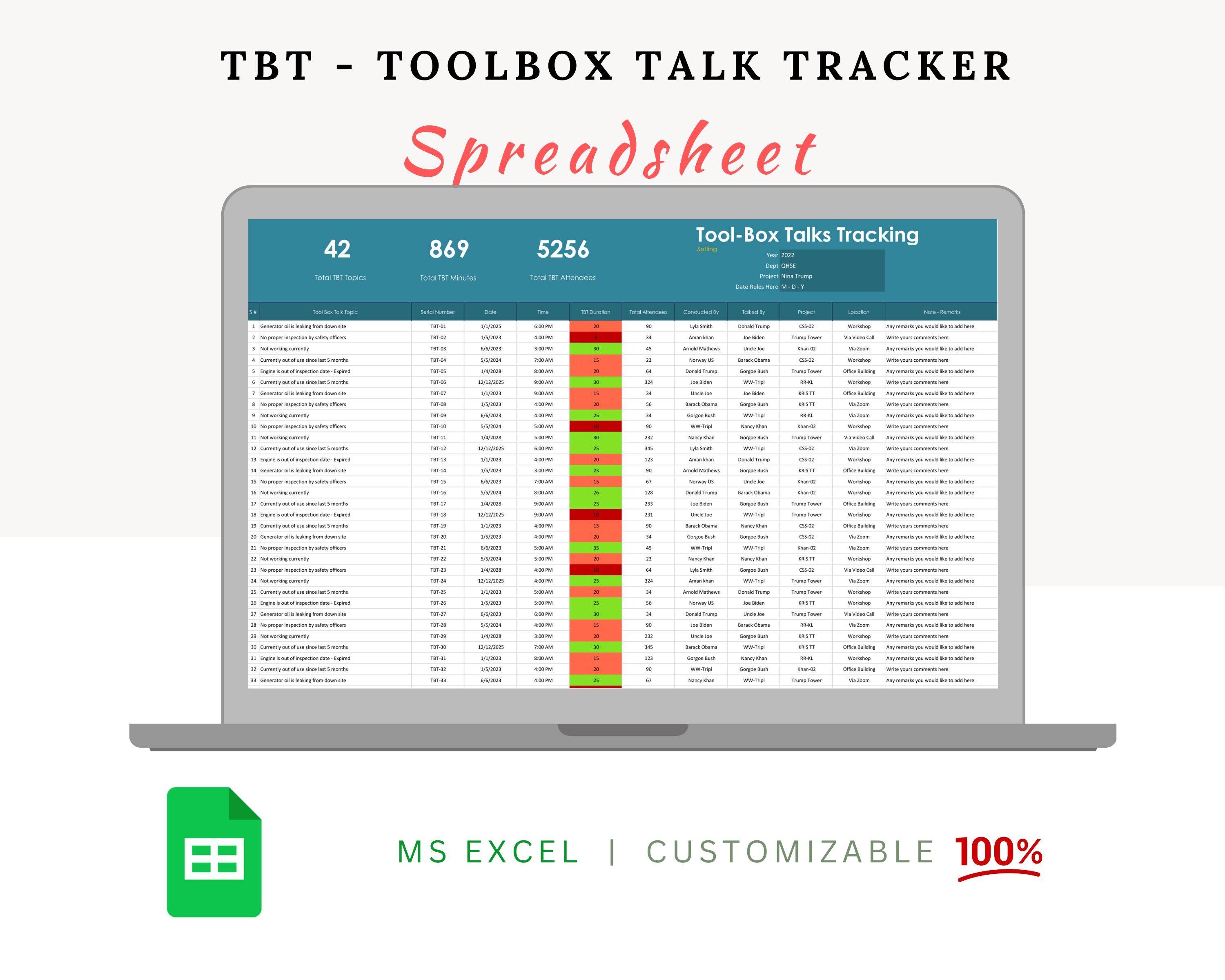
While paper templates work, digital tools improve tracking, accessibility, and compliance. Here are five practical options:
| Tool | Best For | Key Features |
|---|---|---|
| SafetyCulture (iAuditor) | Teams wanting full EHS integration | Pre-built templates, photo evidence, auto-reports, offline use |
| Procore Safety | Construction firms using Procore | Embedded in project platform, real-time dashboards, compliance tracking |
| SiteDocs | Industrial and heavy civil | Custom form builder, barcode inspections, automated reminders |
| SmartWaste | Environmental and waste teams | Topic libraries, multilingual support, audit-ready logs |
| GoFormz | Small crews needing flexibility | Mobile forms, PDF export, integration with Google Workspace |
Choose based on your team size, tech comfort, and compliance needs. Even using a shared Google Doc with a standardized format is better than no system.
Making the Template Stick: Pro Workflow Tips
A template is only as good as its execution. Here’s how to build a culture where safety talks matter:
- Time it right: Hold talks just before work starts—never at the end of the shift.
- Keep it short: 10–12 minutes max. Respect workers’ time.
- Go onsite: Conduct the talk at the actual work location, not in the trailer.
- Use visuals: Bring a damaged harness, show a photo of a near-miss, or sketch a hazard on a whiteboard.
- Rotate leaders: Have crew members lead occasional talks—boosts ownership.
- Review monthly: Audit past talks. Are topics repeating? Are sign-ins complete? Are actions followed up?
A health and safety toolbox talk template isn’t a formality—it’s a frontline defense. The best templates don’t just inform; they involve, challenge, and commit. Use the structure above, customize it for your team, and insist on real conversation.
Safety isn’t created by documents. It’s created by moments—like a five-minute talk that stops someone from stepping too close to an edge.
Start today: pull out your current template (or create one), tailor it to tomorrow’s high-risk task, and make it interactive. That’s how culture changes—one talk at a time.
FAQ
What should you look for in Health and Safety Toolbox Talk Template That Works? Focus on relevance, practical value, and how well the solution matches real user intent.
Is Health and Safety Toolbox Talk Template That Works suitable for beginners? That depends on the workflow, but a clear step-by-step approach usually makes it easier to start.
How do you compare options around Health and Safety Toolbox Talk Template That Works? Compare features, trust signals, limitations, pricing, and ease of implementation.
What mistakes should you avoid? Avoid generic choices, weak validation, and decisions based only on marketing claims.
What is the next best step? Shortlist the most relevant options, validate them quickly, and refine from real-world results.